The YouTube player loads when you press Play.
ORICO Obook15: Everyday Work, Cloud AI and a Local Model
I tried the 24 GB Obook15 with everyday work, ORICO AI and a local model. Here is what stood out, what we measured and what still needs work.
Article published November 3, 2026.
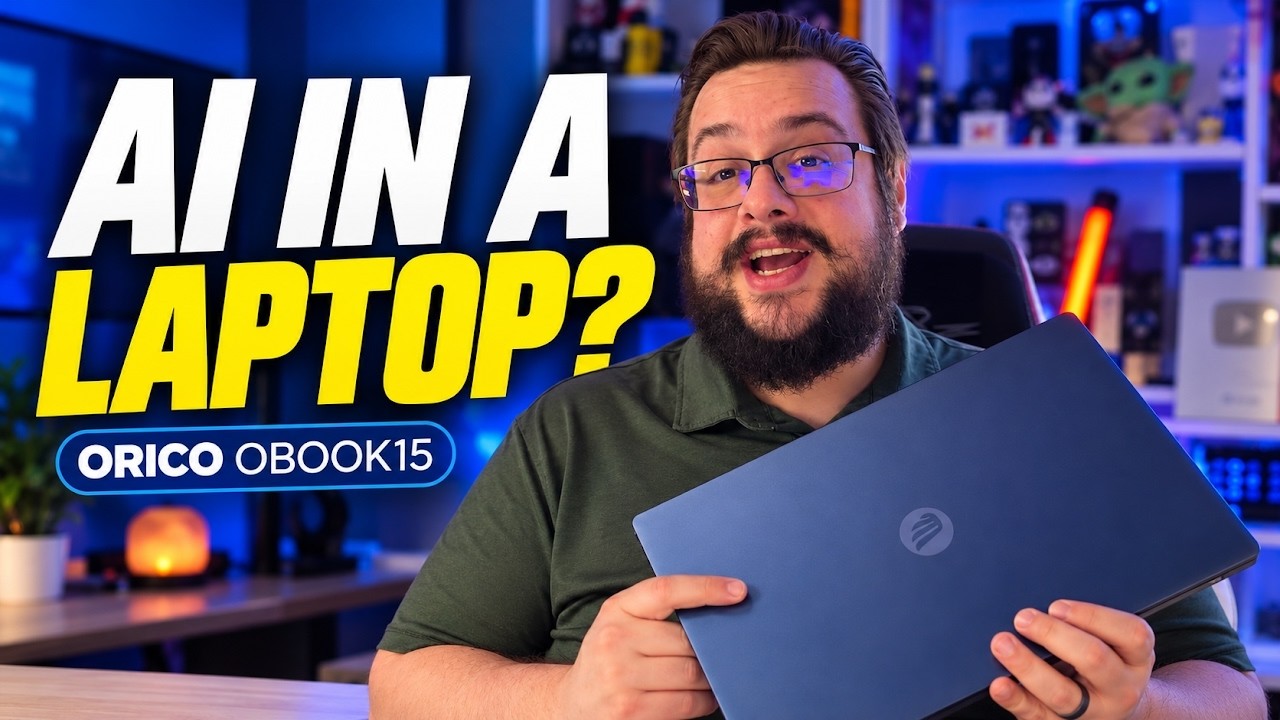
I normally associate ORICO with the things I plug into a computer: storage accessories, USB hubs, that kind of thing. This time, they sent the computer. The Obook15 gave me a chance to try a familiar everyday laptop setup alongside something a little more interesting: cloud AI tools and a small model running locally.
Disclosure: ORICO provided the laptop for the video. These notes cover the configuration and tests shown in my October 31, 2026 video.
The things I notice before opening a benchmark
I like the blue finish. It picks up some fingerprints, but it adds a little color without looking out of place on a desk. The hinge also opens to 180 degrees. That gives you room to adjust the screen when you are showing someone a page or working across a table.
The display is a 15.6-inch, 1920 × 1080 IPS panel at 60 Hz. The matte finish is the part I particularly appreciate. My recording setup has plenty of lights, and distracting reflections are an easy way to make an otherwise useful screen annoying.
There is a backlit keyboard with two brightness levels and a separate number pad. The operator-key layout takes a little adjustment, so I would give myself time to build new muscle memory. The webcam also has a physical privacy shutter: slide it closed and a piece of plastic covers the lens.
24 GB of memory gives this configuration room to work
The unit I tested has an AMD Ryzen 7 6800H, Radeon 680M integrated graphics, 24 GB of memory and a 1 TB NVMe SSD. That memory and storage combination is what stands out to me. A browser full of tabs, a document and a few background applications all need space. So does a local AI model.
The integrated graphics share system memory with Windows and the rest of your applications. The 24 GB figure therefore describes the machine's system memory; it is not 24 GB of dedicated graphics memory. That distinction matters when choosing a model to try.
I also mentioned the manufacturer's listed second M.2 expansion slot in the video. I had not opened the laptop to check it, so I am keeping that separate from the features I physically tested. Check the configuration you are buying, too: my 1 TB unit should not be confused with the lower-capacity option.
USB-A is still invited to the party
The connections listed in the video include two USB-C ports with DisplayPort support, HDMI and two USB-A ports. One USB-A port is listed at 5 Gbps and the other at 480 Mbps. I would keep the faster one for an external drive and use the slower one for a mouse or keyboard.
That is a practical selection for moving between a desk monitor and the accessories I already own. I do not want every everyday connection to require another adapter.
What we actually tried with the AI tools
For an ordinary work task, we put NASA's Moon facts page next to Notepad, took notes and saved the file. Having the source visible while writing is a simple use for the larger screen.
We then brought material into ORICO AI's cloud mode. The tasks included summarizing a fictional workshop note, making a checklist, drafting an invitation and outlining an uploaded research file. The checklist kept track of the owners, deadlines and unresolved decisions in the notes.
The invitation needed a follow-up revision to remove details the draft had added. When we asked for three outline points from two facts, the tool identified its third point as a recap. Another bullet point does not create another Moon fact. This is the workflow I like: bring your own material, get help organizing it, and review the result.
The local model test, including the part that needs work
We installed Ollama separately and tried a 4B model locally with cloud features disabled. Across three CPU runs, the median generation rate was 13.8 tokens per second. With the model loaded, the first generated text arrived in about two-thirds of a second; starting unloaded took about 3.4 seconds.
Those measurements include reasoning text. The model also got stuck overthinking during the short-answer demonstration. I would not treat that throughput figure as a promise of equally fast finished answers, or assume it predicts every other model's performance. Choosing a different model or adjusting the setup still needs some work.
Being able to experiment locally is a useful extra. For this configuration, the 24 GB of memory, 1 TB of storage, matte screen and useful ports are the features I keep coming back to. Watch the video above for the walkthrough, and check the current Obook15 listing for the available configurations and price.
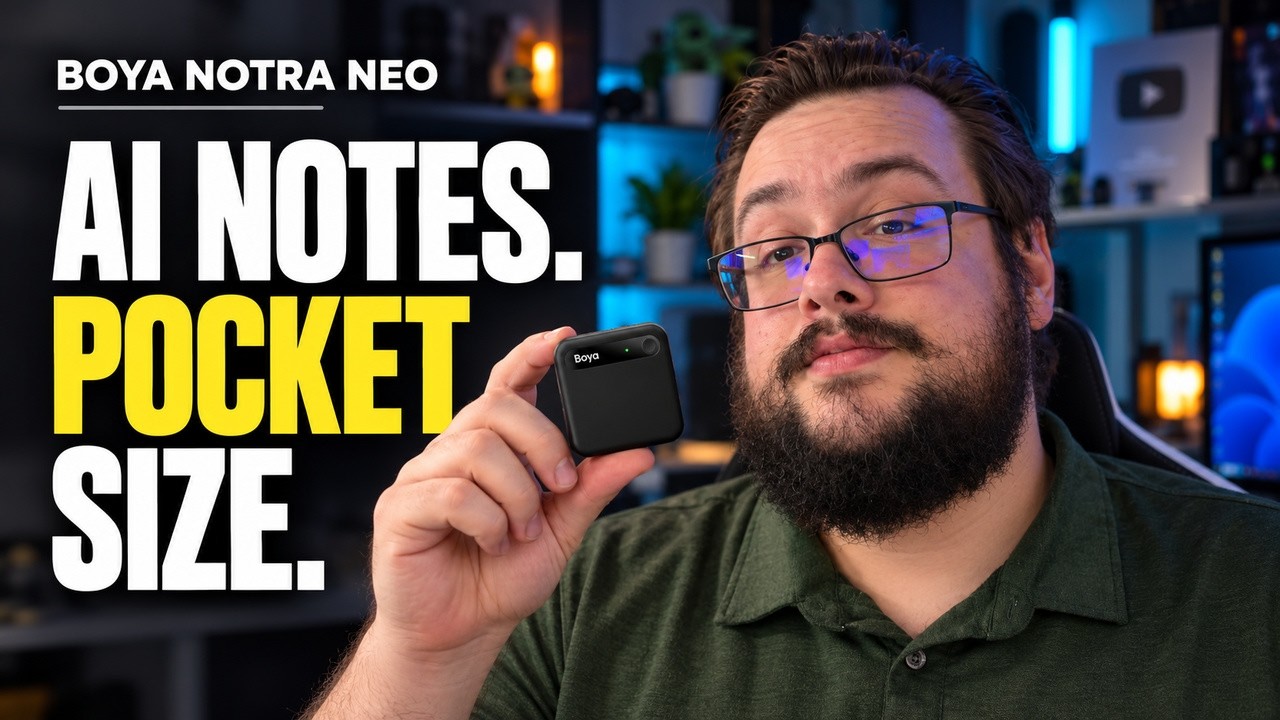
For another look at AI-assisted notes, see my BOYA Notra Neo walkthrough. That starts with recording a conversation and checking the resulting transcript.
Links from the video
Affiliate disclosure: These links may earn me a commission at no extra cost to you.
Coupon code: MIKEOBOOK15 — 15% off. The October 31, 2026 video lists October 31–November 30; check the store for eligibility and current terms.
Links and offers are from the video description. Availability, prices and offer terms may change.
Some links to other products on this page are affiliate links, and we may earn a commission if you buy through them. It costs you nothing extra, and it has not changed what this article says — where a competitor is the better answer, we say so.